
Table of Contents
Key Takeaways
- Reducing hiring costs starts with improving recruitment efficiency rather than reducing hiring quality.
- AI-powered recruitment tools help accelerate candidate screening and support smarter hiring decisions.
- Employee referral programmes provide access to trusted talent while improving recruitment value.
- Well-written job descriptions attract more suitable candidates and simplify the screening process.
- Recruitment software helps employers organise hiring activities and improve overall productivity.
- Talent pools create future hiring opportunities and support faster recruitment when vacancies arise.
- Strong onboarding and employee development programmes help maximise the value of every new hire.
Hiring decisions shape the future of every business. Across the United Kingdom, employers continue exploring practical ways to manage recruitment budgets while attracting talented professionals who can contribute from day one. Every vacancy carries direct and indirect costs, making recruitment efficiency an important part of sustainable business growth.
A thoughtful hiring strategy goes beyond filling positions. It helps businesses strengthen teams, improve productivity, and create long-term value. Many organisations now focus on smarter recruitment processes that support quality hiring while making the best use of available resources.
Several factors influence hiring budgets, including advertising spend, candidate sourcing, interview coordination, onboarding activities, and workforce planning. Employers increasingly seek solutions that help simplify these activities while maintaining high recruitment standards.
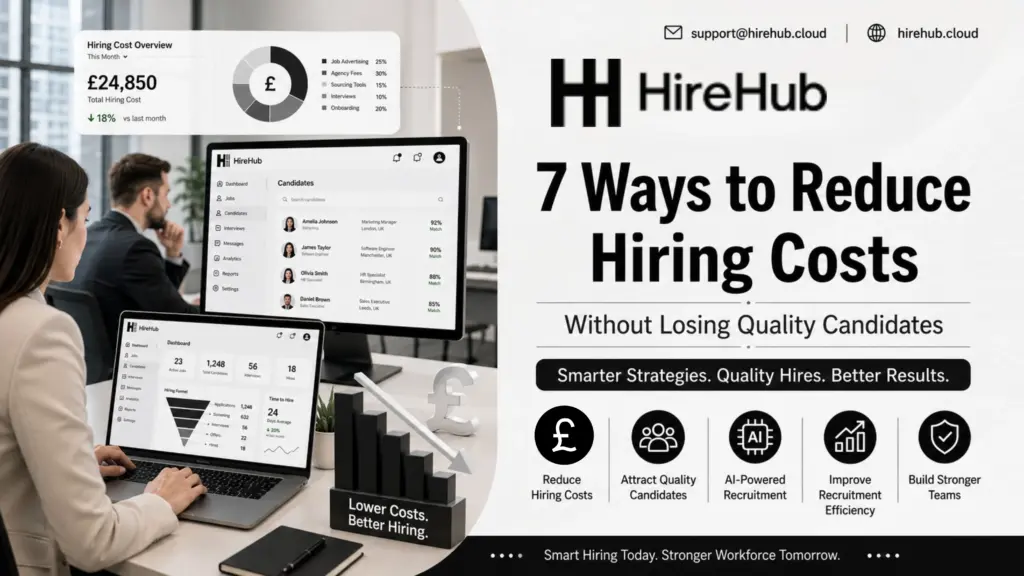
This guide explores seven practical ways to reduce hiring costs without losing quality candidates. From recruitment technology and employee referrals to talent pooling and onboarding improvements, each strategy helps employers create a more efficient and cost-conscious recruitment process while continuing to attract talented professionals.
45% of UK organisations use Generative AI in recruitment. This growing trend highlights how businesses use technology to improve recruitment efficiency, streamline candidate screening, and support better hiring decisions.
Why Hiring Costs Continue Rising Across the UK
Every recruitment decision involves an investment of time, resources, and planning. Across the UK, employers continue adapting to changing workforce expectations, increasing operational expenses, and growing competition for skilled professionals. Understanding the factors behind rising hiring costs helps businesses create smarter recruitment strategies and achieve better hiring outcomes.
The average cost per hire in the UK reaches approximately £6,125. This figure highlights the importance of improving recruitment efficiency and making every hiring decision count.
Rising Employment Costs Create New Hiring Challenges:
Businesses continue investing in competitive salaries, employee benefits, professional development, and workplace wellbeing initiatives. These investments help attract talented candidates and support long-term employee satisfaction.
Key factors include:
- Competitive salary packages: Attractive compensation helps businesses appeal to skilled professionals across different sectors.
- Employee benefits programmes: Pension contributions, wellbeing support, and flexible working arrangements contribute to overall employment costs.
- Training and development opportunities: Professional growth programmes help employees build valuable skills and strengthen organisational performance.
Longer Hiring Cycles Increase Recruitment Spending:
A longer recruitment process often requires additional time and resources. Every stage, from sourcing candidates to final interviews, contributes to overall hiring costs.
Key factors include:
- Extended vacancy periods: Open positions can influence productivity and place additional responsibilities on existing teams.
- Multiple interview stages: Structured hiring processes support better hiring decisions while increasing recruitment activity.
- Administrative coordination: Scheduling interviews, reviewing applications, and communicating with candidates require dedicated resources.
Talent Shortages Push Competition Higher:
Many industries across the UK continue seeking experienced professionals with specialised skills. This growing demand encourages employers to invest more in attracting and engaging quality candidates.
Key factors include:
- High demand for skilled talent: Sectors such as technology, healthcare, logistics, and professional services continue attracting strong competition.
- Employer branding initiatives: Businesses invest in showcasing company culture, career growth opportunities, and employee experiences.
- Candidate engagement activities: Personalised communication and positive recruitment experiences help employers build stronger connections with prospective candidates.
Understanding these factors provides valuable insight into recruitment spending and creates opportunities to improve hiring efficiency while continuing to attract quality candidates.
Understanding the True Cost of Recruitment
Every successful hire involves more than a job advertisement and an interview. Recruitment costs often include a combination of visible expenses and long-term investments that support employee success. Understanding where these costs come from helps employers make informed decisions and create a more efficient hiring process.
UK recruitment agencies typically charge between 15% and 25% of a candidate’s annual salary. This highlights the value of reviewing recruitment channels and choosing solutions that support both quality hiring and budget efficiency.
Recruitment Advertising Adds Up Quickly:
Recruitment advertising plays an important role in attracting qualified candidates. Employers often invest in job boards, social media campaigns, sponsored listings, and employer branding activities to reach the right audience.
Key areas of investment include:
- Job board promotions: Premium listings help vacancies gain greater visibility among active job seekers.
- Social recruitment campaigns: Targeted advertising helps employers connect with candidates who match specific skills and experience requirements.
- Employer branding activities: Company profiles, career pages, and workplace culture content help attract strong applicants.
Agency Fees Consume Large Portions of Hiring Budgets:
Many businesses partner with recruitment agencies to access specialist talent and speed up hiring. While these services provide valuable expertise, agency fees often represent one of the largest recruitment expenses.
Key cost factors include:
- Specialist candidate sourcing: Agencies dedicate resources to finding professionals with specific skills and experience.
- Market expertise: Industry knowledge helps employers connect with suitable candidates more efficiently.
- Candidate management support: Agencies assist with screening, communication, and interview coordination.
Onboarding Costs Continue Beyond the Offer Stage:
The recruitment journey continues after a candidate accepts an offer. Effective onboarding helps new employees settle into their roles, understand company expectations, and contribute confidently.
Important onboarding investments include:
- Training programmes: Structured learning supports employee development and workplace success.
- Technology and equipment: Software access, devices, and tools help employees perform their responsibilities effectively.
- Team integration activities: Early engagement supports collaboration and workplace connections.
Employee Development Supports Long-Term Recruitment Value:
Successful recruitment focuses on building lasting relationships with employees. Career development opportunities, skills enhancement, and workplace support contribute to stronger retention and long-term business growth.
Key benefits include:
- Professional development opportunities: Employees gain new skills and continue progressing within the organisation.
- Career progression pathways: Clear growth opportunities encourage long-term commitment.
- Workplace engagement initiatives: Positive employee experiences support productivity and team success.
A clear understanding of recruitment costs allows businesses to identify opportunities for greater efficiency while continuing to attract and develop quality candidates.
Reduce Hiring Costs with Smarter Recruitment
How Recruitment Efficiency Supports Lower Hiring Costs
Every recruitment process benefits from efficiency. When hiring activities move smoothly from sourcing to onboarding, businesses save time, use resources more effectively, and create stronger outcomes for both employers and candidates. Recruitment efficiency supports better decision-making while helping organisations make the most of their hiring budgets.
The average UK time-to-hire ranges from 40 to 42 days. Businesses that streamline recruitment processes often create faster hiring journeys, helping teams fill vacancies more efficiently and maintain momentum throughout the recruitment cycle.
Faster Hiring Reduces Vacancy Costs:
Open positions represent opportunities waiting to contribute to business growth. A well-organised hiring process helps employers connect with suitable candidates sooner and maintain productivity across teams.
Key benefits include:
- Quicker access to talent: Efficient recruitment processes help businesses engage qualified candidates at the right time.
- Improved team performance: Filling positions sooner supports balanced workloads and smooth day-to-day operations.
- Stronger business continuity: Consistent staffing helps projects, customer service, and operational activities progress effectively.
Streamlined Processes Improve Recruiter Productivity:
Recruitment teams achieve better results when processes remain clear, structured, and easy to manage. Technology and workflow improvements help recruiters focus on meaningful interactions rather than repetitive administrative tasks.
Key benefits include:
- Simplified candidate management: Centralised systems help recruiters organise applications and track progress efficiently.
- Better use of recruitment resources: Time and effort can focus on candidate engagement and hiring decisions.
- Improved collaboration: Hiring managers and recruiters can work together more effectively through shared visibility and communication.
Better Candidate Experiences Support Stronger Hiring Outcomes:
Candidates appreciate a recruitment process that feels clear, responsive, and professional. Positive experiences encourage engagement and help employers build stronger connections with potential team members.
Key benefits include:
- Clear communication: Regular updates help candidates stay informed throughout the hiring journey.
- Professional interactions: Well-managed recruitment processes create positive impressions of the organisation.
- Higher engagement levels: Candidates who enjoy a positive experience often respond more actively and participate confidently throughout the recruitment process.
Recruitment efficiency creates value at every stage of hiring. Faster processes, productive recruitment teams, and positive candidate experiences work together to support stronger hiring outcomes while helping businesses manage recruitment costs more effectively.
7 Ways to Reduce Hiring Costs Without Losing Quality Candidates
Every employer wants to build a strong team while making the most of their recruitment budget. The good news is that cost-conscious hiring and quality candidate attraction can work together.
A thoughtful recruitment strategy focuses on efficiency, candidate experience, and smart use of technology. Small improvements across the hiring process often create meaningful savings while helping businesses connect with talented professionals who fit both the role and company culture.
The following strategies help UK employers improve recruitment efficiency, strengthen hiring outcomes, and make every recruitment investment deliver greater value.
Automate Candidate Screening with AI Recruitment Tools:
Recruitment teams often spend valuable time reviewing applications, organising candidate information, and coordinating early-stage assessments. AI-powered recruitment tools help simplify these activities and create a more efficient hiring process.
AI-powered recruitment tools can reduce manual recruitment tasks by up to 80%. This allows recruiters to focus more time on candidate engagement and strategic hiring decisions.
Key benefits include:
- AI matching: Technology helps identify candidates whose skills and experience closely align with vacancy requirements.
- CV screening support: Automated screening quickly highlights relevant applications and supports faster shortlisting.
- Candidate ranking: Recruiters gain a clearer view of candidate suitability based on predefined criteria.
- Recruitment automation: Routine administrative activities move more smoothly, helping teams focus on meaningful conversations with candidates.
AI recruitment tools help employers improve efficiency while maintaining a strong focus on candidate quality.
Build a Strong Employee Referral Programme:
Employees often know professionals who share similar values, work ethics, and industry experience. A referral programme creates opportunities to tap into these trusted networks while strengthening recruitment efficiency.
Internal hiring and referral-based recruitment generate approximately 25% more hires than the global average within UK organisations.
Key benefits include:
- Access to trusted networks: Employees introduce candidates they believe can contribute positively to the organisation.
- Faster recruitment cycles: Referrals often progress through hiring stages more efficiently due to existing connections.
- Stronger cultural alignment: Referred candidates frequently arrive with a clearer understanding of company values and expectations.
- Improved long-term engagement: Referral programmes help create stronger relationships between employees and the organisation.
A well-structured referral programme supports quality hiring while reducing reliance on costly sourcing methods.
Develop a Talent Pool Before Vacancies Open:
Successful recruitment often begins before a vacancy appears. Building a talent pool creates a ready network of interested professionals who may become future candidates.
Key benefits include:
- Previous applicants remain valuable: Candidates who performed well during earlier recruitment campaigns may suit future opportunities.
- Passive candidates stay connected: Industry professionals can engage with company updates and future openings.
- Future hiring becomes more efficient: Existing candidate relationships reduce sourcing time when vacancies arise.
- Recruitment planning improves: Employers gain greater visibility into available talent and workforce needs.
A proactive talent pool helps organisations move quickly when hiring opportunities emerge.
Improve Job Descriptions for Better Applicant Quality:
A clear and engaging job description helps attract candidates whose skills and career goals align with the position. Well-written vacancies encourage stronger applications and improve recruitment efficiency.
Key benefits include:
- Clear role expectations: Candidates gain a better understanding of responsibilities and requirements.
- Skills-focused hiring: Emphasising essential skills helps attract applicants who can contribute effectively.
- Targeted candidate attraction: Specific job details encourage applications from relevant professionals.
- Enhanced employer brand: Professional job descriptions reflect positively on the organisation.
Strong job descriptions create better alignment between employers and candidates from the beginning of the recruitment process.
Use Recruitment Software to Streamline Hiring Workflows:
Modern recruitment software helps employers organise hiring activities within a single system. This creates greater visibility and supports more efficient recruitment management.
Key benefits include:
- Applicant Tracking Systems (ATS): Candidate information remains organised and easy to manage throughout the hiring process.
- Candidate management tools: Recruiters can track progress, communication, and application stages efficiently.
- Interview scheduling support: Coordinating interviews becomes faster and more convenient for all participants.
- Recruitment dashboards: Performance insights help employers identify opportunities for continuous improvement.
Recruitment software supports consistency, efficiency, and better decision-making throughout the hiring journey.
Invest in Internal Development and Career Progression:
Many organisations already have talented employees who possess the potential to take on new responsibilities. Internal development programmes help businesses maximise existing talent while supporting employee growth.
Key benefits include:
- Internal mobility opportunities: Employees can progress into new roles and responsibilities.
- Upskilling initiatives: Training programmes help teams develop valuable new capabilities.
- Career progression pathways: Clear advancement opportunities encourage long-term commitment.
- Workforce flexibility: A skilled workforce adapts more easily to changing business needs.
Investing in employee development often delivers lasting value while supporting recruitment efficiency.
Strengthen Onboarding to Reduce Future Hiring Costs:
A positive onboarding experience helps new employees feel welcomed, informed, and prepared for success. Effective onboarding contributes to stronger engagement and long-term workforce stability.
Key benefits include:
- Faster productivity: Employees gain confidence and begin contributing more quickly.
- Stronger workplace connections: Early engagement supports collaboration and team integration.
- Enhanced employee experience: Structured onboarding creates a positive first impression.
- Long-term workforce stability: Employees who feel supported often develop stronger relationships with the organisation.
A thoughtful onboarding process strengthens the value of every hire and supports future recruitment success.
Turn Recruitment Efficiency into Real Savings
Which Recruitment Software Features Deliver the Greatest Return on Investment?
Recruitment software has become an essential part of modern hiring. The right technology helps employers save time, improve recruitment efficiency, and make better use of hiring budgets. Rather than focusing solely on filling vacancies, successful recruitment software supports every stage of the hiring process, from candidate sourcing to final selection.
Businesses that invest in the right features often benefit from stronger candidate experiences, faster hiring decisions, and improved recruitment outcomes.

Applicant Tracking Systems Improve Recruitment Visibility:
An Applicant Tracking System helps employers organise applications, monitor recruitment progress, and maintain visibility throughout the hiring process.
Key benefits include:
- Centralised candidate records: Candidate information remains accessible and organised within one platform.
- Improved workflow management: Recruiters can monitor each stage of the hiring journey more efficiently.
- Enhanced collaboration: Hiring managers and recruitment teams can review applications and share feedback more effectively.
- Better recruitment visibility: Clear oversight helps employers make informed hiring decisions.
AI Matching Helps Recruiters Focus on Qualified Candidates:
AI-powered matching technology supports recruiters by identifying candidates whose skills, experience, and preferences align with specific roles.
Key benefits include:
- Smarter candidate recommendations: Suitable candidates appear more quickly during the screening process.
- Faster shortlisting: Recruiters spend more time engaging with relevant applicants.
- Improved hiring accuracy: Better alignment between candidate profiles and job requirements supports stronger hiring outcomes.
- Greater recruitment efficiency: Teams can focus attention on high-potential candidates.
Automation Reduces Administrative Workloads:
Recruitment automation helps simplify routine tasks that support the hiring process. This creates more time for strategic recruitment activities and candidate engagement.
Key benefits include:
- Automated interview scheduling: Coordinating interviews becomes faster and more convenient.
- Candidate communication support: Timely updates help maintain engagement throughout the recruitment journey.
- Workflow consistency: Recruitment activities follow structured and organised processes.
- Time savings: Recruiters can focus on relationship-building and talent acquisition.
Recruitment Analytics Support Better Hiring Decisions:
Recruitment analytics provide valuable insights into hiring performance, helping employers identify opportunities for continuous improvement.
Key benefits include:
- Performance tracking: Employers can measure recruitment efficiency and hiring outcomes.
- Data-driven planning: Insights support more informed workforce decisions.
- Resource optimisation: Recruitment budgets can be allocated more effectively.
- Continuous improvement opportunities: Ongoing analysis helps strengthen future hiring strategies.
The greatest return on investment comes from recruitment software that combines visibility, automation, intelligence, and analytics. Together, these features help employers improve hiring efficiency, attract quality candidates, and make smarter recruitment decisions that support long-term business growth.
Common Recruitment Cost Mistakes That Affect Candidate Quality
Every employer aims to create an efficient recruitment process while attracting talented professionals. Sometimes, small gaps in hiring strategies can increase recruitment expenses and limit opportunities to connect with the best candidates. Understanding these common challenges helps businesses strengthen recruitment outcomes and make better use of their hiring budgets.
Relying Too Heavily on Recruitment Agencies:
Recruitment agencies provide valuable expertise and access to specialist talent. However, combining agency support with direct hiring channels often creates greater flexibility and efficiency.
Key considerations include:
- Balanced sourcing strategies: Using multiple recruitment channels expands access to a wider talent pool.
- Employer branding opportunities: Direct engagement helps businesses showcase their culture and career opportunities.
- Long-term talent development: Building internal recruitment capabilities supports future hiring success.
Delaying Hiring Decisions:
Timely decision-making helps maintain momentum throughout the recruitment process. Candidates appreciate clear communication and structured timelines.
Key considerations include:
- Faster candidate engagement: Prompt feedback helps maintain interest and enthusiasm.
- Efficient interview scheduling: Well-organised recruitment stages create a smoother candidate experience.
- Improved hiring outcomes: Timely decisions help employers secure suitable candidates more effectively.
Overlooking Candidate Experience:
Every interaction contributes to a candidate’s perception of an employer. A positive recruitment experience strengthens employer reputation and encourages candidate engagement.
Key considerations include:
- Clear communication: Regular updates help candidates feel informed and valued.
- Professional recruitment processes: Well-structured hiring activities create confidence and trust.
- Positive employer perception: Strong candidate experiences often encourage future applications and referrals.
Giving Less Attention to Employee Development and Retention:
Successful recruitment extends beyond filling vacancies. Supporting employees through development opportunities and workplace engagement helps maximise the value of every hire.
Key considerations include:
- Career growth opportunities: Employees appreciate clear pathways for professional progression.
- Skills development programmes: Ongoing learning supports workforce capability and business growth.
- Employee engagement initiatives: Strong workplace experiences encourage long-term commitment and satisfaction.
Employers who focus on balanced sourcing, timely hiring decisions, positive candidate experiences, and employee development often create stronger recruitment outcomes while making the most of their hiring investments.
How HireHub Helps Employers Reduce Hiring Costs and Improve Recruitment Efficiency?
Every employer wants a hiring process that delivers quality candidates, saves time, and supports business growth. HireHub brings these goals together through intelligent recruitment technology designed for modern employers.
By combining AI-powered matching, verified profiles, recruitment security, and flexible workforce solutions, HireHub helps businesses create a more efficient recruitment journey while making the most of every hiring investment.
AI Matching Supports Faster Candidate Shortlisting:
Finding suitable candidates becomes easier when technology helps identify the strongest matches. HireHub’s AI Matching feature analyses candidate skills, experience, and job requirements to present relevant applicants quickly.
Key benefits include:
- Smarter candidate matching: Suitable applicants appear faster within the recruitment process.
- Improved recruitment efficiency: Hiring teams can focus on engaging with quality candidates.
- Faster shortlisting: Recruitment activities move forward with greater speed and accuracy.
Verified Candidate Profiles Improve Hiring Confidence:
Candidate verification helps employers make informed hiring decisions by providing additional trust and transparency throughout the recruitment process.
Key benefits include:
- Verified candidate information: Employers gain greater confidence when reviewing applications.
- Enhanced profile credibility: Verification badges highlight trusted candidate profiles.
- Improved recruitment quality: Additional validation supports stronger hiring decisions.
Recruitment Security Strengthens Employer Trust:
Security plays an important role in modern recruitment. HireHub provides features that help protect accounts, candidate information, and recruitment activities.
Key benefits include:
- Multi-factor authentication: Additional account protection supports secure platform access.
- Secure recruitment environment: Employers and candidates benefit from enhanced trust and safety measures.
- Data protection support: Recruitment information remains protected throughout the hiring process.
Temporary Workforce Solutions Support Flexible Hiring Needs:
Many businesses experience changing workforce requirements throughout the year. HireHub helps employers access temporary and flexible staffing opportunities when additional support becomes valuable.
Key benefits include:
- Flexible hiring options: Employers can respond efficiently to changing workforce demands.
- Access to temporary talent: Qualified candidates remain available for short-term opportunities.
- Workforce planning support: Businesses can scale recruitment efforts according to operational needs.
Recruitment Tools Simplify Hiring Workflows:
Managing recruitment activities becomes easier when essential tools are available within a single platform. HireHub supports employers with practical solutions that help organise and streamline hiring processes.
Key benefits include:
- Centralised recruitment management: Hiring activities remain organised and easy to monitor.
- Improved collaboration: Recruiters and hiring managers can work together more effectively.
- Better hiring visibility: Recruitment progress remains clear throughout every stage of the process.
By combining AI-powered recruitment technology, candidate verification, workforce flexibility, and recruitment security, HireHub helps UK employers create a more efficient hiring process while continuing to attract quality candidates and support long-term business growth.
Frequently Asked Questions
How much does it cost to hire an employee in the UK?
The cost of hiring an employee in the UK varies depending on factors such as the role, industry, recruitment method, and onboarding requirements. Recruitment expenses often include job advertising, recruitment software, agency fees, interview coordination, training, and onboarding activities. Many businesses focus on improving recruitment efficiency and adopting technology-driven hiring solutions to maximise the value of every recruitment investment.
Which recruitment costs have the greatest impact on hiring budgets?
Several elements contribute to recruitment spending, including candidate sourcing, job advertising, agency services, interview management, onboarding, and employee development. Agency fees and extended hiring timelines often represent a significant portion of recruitment budgets. Employers who streamline recruitment processes and use modern hiring technology can create greater efficiency while maintaining candidate quality.
How does recruitment software help reduce hiring costs?
Recruitment software helps employers organise applications, automate routine tasks, manage candidate communication, and improve visibility throughout the hiring process. Features such as Applicant Tracking Systems, AI-powered matching, interview scheduling tools, and recruitment analytics support faster hiring decisions and more efficient use of recruitment resources. These improvements help businesses attract quality candidates while optimising recruitment budgets.
Why do employee referrals support cost-effective recruitment?
Employee referrals help employers connect with professionals through trusted networks. Referred candidates often arrive with a stronger understanding of company culture and role expectations, which supports a smoother recruitment experience. Referral programmes also encourage employee engagement and provide an efficient sourcing channel that complements broader recruitment efforts.
How does AI recruitment improve recruitment efficiency?
AI recruitment technology helps identify suitable candidates by analysing skills, experience, qualifications, and job requirements. Automated matching and screening tools support faster shortlisting and allow recruiters to spend more time engaging with candidates. This approach improves efficiency while helping employers maintain a strong focus on hiring quality.
Which recruitment metrics should employers monitor?
Employers often monitor metrics such as cost per hire, time to hire, application completion rates, candidate engagement, source effectiveness, and quality of hire. These insights help organisations evaluate recruitment performance, identify opportunities for improvement, and make informed hiring decisions that support long-term workforce planning.
How can businesses improve recruitment efficiency without affecting candidate quality?
Businesses can improve recruitment efficiency by refining job descriptions, building talent pools, introducing employee referral programmes, investing in recruitment software, and using AI-powered hiring tools. These strategies help employers attract relevant candidates, streamline hiring activities, and create positive recruitment experiences while maintaining a strong focus on candidate quality.
What role does candidate experience play in recruitment success?
Candidate experience influences how job seekers perceive an organisation throughout the recruitment journey. Clear communication, timely updates, professional interactions, and structured hiring processes help create positive impressions and strengthen employer reputation. A positive experience encourages candidate engagement and supports successful hiring outcomes.
How does a talent pool support future hiring needs?
A talent pool provides employers with access to candidates who have previously expressed interest in career opportunities or possess skills that may become valuable in the future. Maintaining these relationships helps businesses respond more efficiently when vacancies arise and supports long-term workforce planning.
How can HireHub help employers reduce hiring costs?
HireHub helps employers improve recruitment efficiency through AI-powered candidate matching, verified candidate profiles, recruitment security features, temporary workforce solutions, and streamlined hiring tools. These features help businesses connect with quality candidates more efficiently, support informed hiring decisions, and create a recruitment process that delivers greater value across every stage of hiring.
Conclusion: Building a Smarter Hiring Strategy for Long-Term Success
Managing recruitment costs successfully involves more than simply reducing expenses. The most effective hiring strategies focus on creating value at every stage of the recruitment journey. Businesses that invest in efficient processes, modern recruitment technology, and positive candidate experiences often achieve stronger hiring outcomes while making the best use of their recruitment budgets.
Across the UK, employers continue adapting to rising recruitment costs, evolving workforce expectations, and increasing demand for skilled professionals. These changes create opportunities to refine hiring strategies and adopt approaches that support both efficiency and quality.
The strategies discussed throughout this guide demonstrate how thoughtful recruitment planning can deliver meaningful results.
Key learnings include:
- Recruitment efficiency creates measurable value: Streamlined hiring processes help businesses save time and allocate resources more effectively.
- AI recruitment supports smarter hiring decisions: Intelligent matching and automation help employers focus on quality candidates.
- Strong candidate experiences encourage engagement: Clear communication and professional recruitment processes strengthen employer reputation.
- Employee referrals and talent pools improve sourcing efficiency: Building relationships before vacancies arise supports future hiring success.
- Recruitment technology enhances visibility and control: Modern tools provide valuable insights that support informed decision-making.
Businesses that combine these strategies create stronger teams, improve hiring outcomes, and support long-term workforce success. As recruitment continues to evolve, employers who embrace efficiency, technology, and candidate-focused hiring practices will remain well-positioned for future growth.
The following frequently asked questions provide additional insights to help employers further strengthen their recruitment strategies.