
Table of Contents
Key Takeaways
- Read the job description and match your experience with the skills the employer values most.
- Research the company, team and role before preparing your answers.
- Use STAR examples to explain your actions, strengths and positive results clearly.
- Prepare a short introduction that connects your current experience with the opportunity.
- Plan travel, documents or video-call technology early.
- Ask thoughtful questions about the role, training and team priorities.
- Keep your CV and candidate profile updated for future opportunities.
- Use every interview as a chance to build confidence and career clarity.
Strong interview performance grows through focused preparation, genuine examples and clear communication. A job interview gives you a valuable chance to connect your skills, experience and motivation with an employer’s needs. Instead of relying on word-for-word scripts, prepare stories and examples that reflect how you work, support others and achieve results.
These interview preparation tips support candidates applying for permanent roles, temporary work, part-time jobs, retail positions, hospitality roles, warehouse and logistics opportunities, customer-service jobs, office and administration roles. The guidance also supports video, telephone and in-person interviews.
Every role brings different priorities. Some employers value customer care and teamwork. Others focus on organisation, reliability, communication, shift availability or attention to detail. Preparation helps you understand these priorities, choose relevant examples and share your strengths with greater confidence.
Quick Interview Preparation Checklist
Use this simple checklist before every interview. Each step helps you create a clear plan and focus on the details that matter.
- Read the job description closely: Highlight the skills, responsibilities and qualities connected with the role.
- Research the employer and role: Explore the company’s services, values, customers and current priorities.
- Prepare STAR examples: Select real experiences that show teamwork, communication, problem-solving and positive results.
- Practise common interview questions: Shape clear answers around your experience, strengths and career goals.
- Plan travel or test technology: Confirm the interview location, journey time, camera, microphone and internet connection.
- Review your CV: Keep your interview examples aligned with the skills and achievements included in your CV.
- Prepare questions for the interviewer: Ask about the role, team, training, daily responsibilities and next steps.
Why Does Interview Preparation Matter?
Preparation helps you enter an interview with a clear plan. You can connect your skills, working style and availability with the qualities an employer values. The Office for National Statistics recorded 707,000 UK vacancies between March and May 2026, with 2.5 people seeking work for each available vacancy. Focused preparation helps your experience feel relevant, clear and memorable.
Preparation Turns Experience Into Stronger Evidence:
A well-chosen example gives an interviewer a useful picture of how you work. Think about moments where you helped a customer, supported a colleague, completed an important task or improved a process.
- Relevant examples: Choose experiences that connect with the role’s key skills and daily responsibilities.
- Personal contribution: Explain the actions you took, the choices you made and the support you gave.
- Clear outcomes: Share results such as positive customer feedback, completed tasks, smoother teamwork or time saved.
- Everyday experience: Draw from previous roles, temporary work, studies, volunteering, group projects or community activities.
Tailored Answers Help Employers Assess Role Fit:
Tailored answers help employers understand how your skills, behaviour and availability connect with the vacancy. They also show that you have prepared with care and understand the role.
- Skills connection: Link your experience with the skills listed in the job description.
- Working approach: Share examples that highlight communication, teamwork, reliability, flexibility and attention to detail.
- Availability details: Explain your preferred hours, potential start date and shift preferences clearly.
- Career direction: Describe how the opportunity supports your skills, growth and contribution to the team.
Build Your Preparation Plan From the Job Description:
Your job description can shape every part of your interview preparation. It highlights the qualities, tasks and working patterns linked with the role. Focused preparation helps you present your experience with clarity and purpose for each opportunity.
The Job Description Highlights Employer Priorities:
Read the job description carefully and mark the details that guide your preparation.
- Skills: Highlight abilities such as communication, customer service, teamwork, organisation and attention to detail.
- Responsibilities: Connect daily duties with examples from your work, studies, volunteering or previous roles.
- Behaviours: Look for qualities such as reliability, flexibility, initiative and a positive working approach.
- Shift requirements: Prepare clear information about your preferred hours, start date and availability.
- Location expectations: Review travel arrangements, workplace location and working patterns.
- Essential criteria: Give extra focus to the skills and experience that carry the greatest value for the role.
Repeated Terms Reveal Likely Interview Themes:
Repeated words often guide the interview conversation and help you select strong examples.
- Customer service: Prepare a story about helping a customer or improving their experience.
- Teamwork: Share an example of supporting colleagues during a busy task or shift.
- Communication: Explain how you shared clear information with customers, colleagues or managers.
- Problem-solving: Describe how you found a practical solution that supported the team or customer.
- Reliability: Share examples of punctuality, consistent performance and completing tasks with care.
- Flexibility: Explain how you adapted to new duties, changing priorities or varied working hours.
- Attention to detail: Show how careful checking supported accuracy, quality or customer satisfaction.
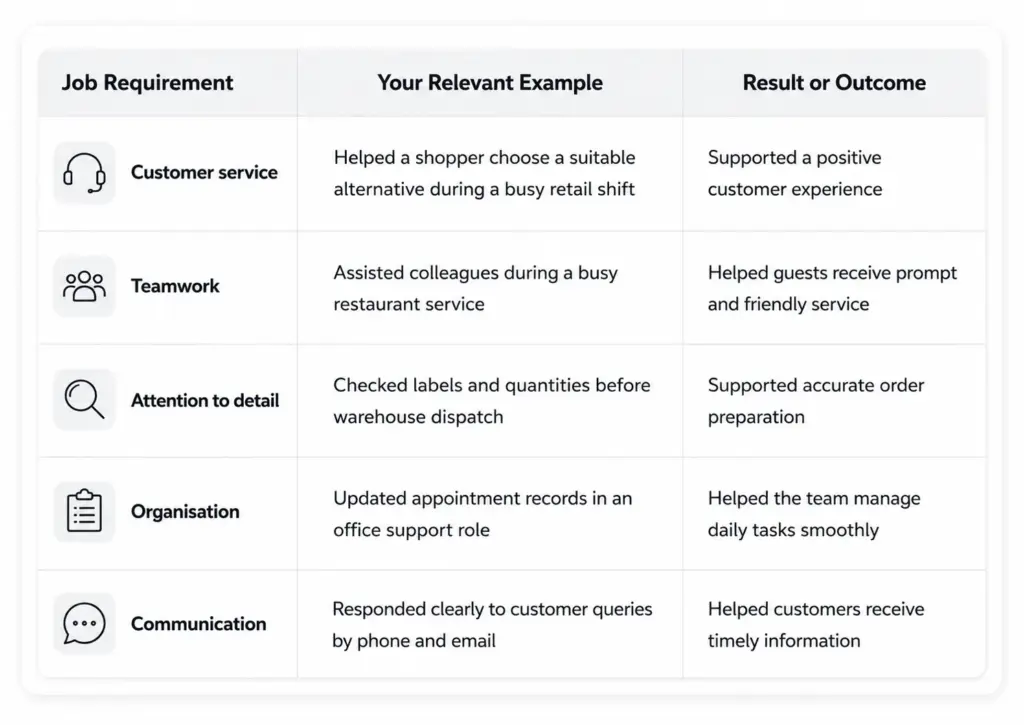
A Requirement-to-Evidence Table Creates Focused Answers:
Use this table to connect the role requirements with examples from your own experience.
What Should You Research Before an Interview?
Research helps you enter the interview with useful knowledge about the employer and the opportunity. Indeed’s 2024 Workforce Insights research found that 74% of respondents looked for salary information while researching a company. Salary matters, alongside the role, team, values, learning opportunities and daily working experience.
Company Research Strengthens Your Motivation Answer:
Start with the company website and build a simple picture of the business.
- About Us page: Learn about the company story, purpose and values.
- Products or services: Understand what the company provides and how it supports customers.
- Customers: Explore the people, businesses or communities the company serves.
- Business priorities: Look for goals, new services, team growth or customer-focused plans.
These details help you explain why the role feels meaningful for your skills and career goals.
Sector Awareness Adds Useful Context:
A few well-chosen updates can help you speak with greater awareness.
- Company updates: Read recent news, social posts or announcements.
- Sector developments: Explore customer needs, new ideas and service expectations.
- Competitor knowledge: Identify similar businesses and the qualities that help the employer stand out.
Research Supports Better Questions for the Interviewer:
Your research can inspire thoughtful questions that show genuine interest.
- Team priorities: Ask about current goals and daily collaboration.
- Training support: Explore how new starters build skills.
- Role expectations: Ask what success looks like during the first few months.
- Career growth: Discuss learning opportunities linked with the role.
Prepare Your CV With Confidence
Prepare STAR Examples That Demonstrate Your Strengths
Every interview gives you a fresh chance to show how your skills can support the role. STAR examples help you share your experience in a focused and memorable way.
Five or Six Strong Examples Cover Most Competency Questions:
You can prepare five or six flexible examples and adapt them for different interview questions. Choose stories that show your approach to teamwork, customer service, communication, organisation, learning and problem-solving.
- Teamwork example: Share a time when you supported colleagues during a busy shift or group task.
- Customer service example: Describe how you helped someone find a useful solution or enjoy a positive experience.
- Problem-solving example: Explain how you found a practical way forward and supported a smooth outcome.
- Achievement example: Highlight a task, target or project that you completed with care and focus.
The STAR Framework Keeps Answers Clear:
STAR gives your answer a simple structure that helps the interviewer follow your story.
- Situation: Set the scene with a short description of the event.
- Task: Explain your responsibility or goal.
- Action: Share the steps you took and the choices you made. Use “I” language to show your personal contribution.
- Result: Describe the positive outcome, learning or value you created.
Everyday Experience Can Provide Useful Evidence:
Strong examples can come from many parts of your life.
- Previous jobs: Use customer service, teamwork or organisation examples.
- Temporary and part-time work: Highlight adaptability, reliability and shift readiness.
- Education and group projects: Share planning, communication and shared-goal examples.
- Volunteering and apprenticeships: Show commitment, learning and community support.
- Sport, freelance work and family responsibilities: Demonstrate leadership, time management and practical problem-solving.
Measurable Outcomes Make Examples More Credible:
Real results add colour and value to your answers.
- Time saved: Explain how your actions helped a task move forward smoothly.
- Customer feedback: Share positive comments or appreciation received.
- Targets achieved: Mention sales, service, attendance or task goals.
- Accuracy improved: Describe how careful checking supported quality.
- Tasks completed: Explain how you helped a team deliver work on time.
How Can You Answer “Tell Me About Yourself”?:
This question gives you an early chance to connect your experience with the role. A focused answer helps the interviewer understand your current position, the skills you bring and the direction you want to take next. Aim for a confident, natural introduction that takes around one minute.
A Present-Past-Future Structure Keeps the Answer Focused:
Use three simple parts to guide your response.
- Present: Share your current role, course, job search stage or career position.
- Past: Highlight relevant skills, achievements or experience that support the vacancy.
- Future: Explain why this opportunity supports your next career step.
Role Relevance Creates a Stronger Introduction:
Choose details that connect with the role. A retail candidate can highlight customer service and teamwork. A warehouse candidate can mention accuracy, reliability and shift readiness. An office candidate can focus on organisation, communication and supporting colleagues.
- Match the role: Choose strengths that reflect the job description.
- Use real examples: Mention an achievement, responsibility or skill that shows your value.
- Show motivation: Share why the role feels like a positive next step.
A Flexible Framework Sounds Natural During the Interview:
Use this adaptable structure and shape it around your own experience:
“I currently work or study in [your current area], where I have developed strengths in [relevant skills]. Through [previous role, project or experience], I have built experience in [relevant responsibility or achievement]. This opportunity appeals to me because it allows me to contribute these skills while developing further in [role area or sector].”
Your own words, experiences and goals give this answer its strongest voice.
Practise Common Interview Questions With Purpose:
Interview questions help employers understand how you work, communicate and contribute to a team. Focused preparation helps your experience stand out through clear examples and thoughtful answers.
Every Question Explores a Skill, Behaviour or Motivation:
Each question gives an employer a different view of your strengths and working style.
- Experience: Questions about your background help employers understand your skills and previous responsibilities.
- Motivation: Questions about the company or role show what interests you about the opportunity.
- Working style: Questions about teamwork, communication and pressure explore how you approach daily tasks.
- Availability: Questions about hours, start dates and shifts help employers plan the role effectively.
Answer Frameworks Create Confidence and a Natural Tone:
Use these simple prompts to shape your answers.
- Tell me about yourself: Share your current role, relevant experience and the reason this opportunity suits your next step.
- Why do you want to work here?: Connect the company’s work, values or customers with your skills and interests.
- Why do you want this role?: Highlight the duties that match your strengths, experience and career goals.
- What are your strengths?: Choose skills linked with the role and support each one with a short example.
- What development area are you working on?: Choose a skill you are building through practice, learning or feedback.
- Tell me about a time you solved a problem: Use a STAR example that shows your actions and the positive outcome.
- Describe a time you worked in a team: Share how you supported colleagues and helped the group reach a shared goal.
- How do you handle pressure?: Explain how you organise priorities, communicate clearly and keep tasks moving forward.
- What are your salary expectations?: Share a realistic range based on the role, your experience and current market research.
- What availability can you offer?: Give clear details about your start date, working hours and shift preferences.
Honest Answers Create Stronger Professional Credibility:
Real examples help employers understand the value you can bring to the role.
- Accurate details: Share achievements, skills and responsibilities that reflect your experience.
- Professional comments: Keep references to previous workplaces respectful and forward-looking.
- Genuine examples: Use stories from work, education, volunteering, projects or temporary roles.
- Clear outcomes: Add practical results such as customer appreciation, completed tasks, time saved or targets achieved.
How Should You Prepare for Different Interview Formats?
Interview preparation works best when it matches the format. Face-to-face, video, telephone and panel interviews each need a simple plan. Focus on the practical details first, then give your energy to the conversation, your examples and the employer’s questions.
Face-to-Face Interviews Need Practical Planning:
A well-planned journey helps you arrive feeling calm and ready to begin.
- Location details: Confirm the building, entrance, floor and interviewer’s name.
- Travel route: Check the journey, parking options and public transport times.
- Arrival time: Aim to reach the area around 10 to 15 minutes early.
- Professional presentation: Choose clean, comfortable clothing that suits the employer and role.
- Interview materials: Bring a printed CV, requested identification, a pen and a small notebook.
- Phone settings: Place your phone on silent before entering the interview space.
Video Interviews Need Reliable Technology and a Calm Setting:
A few checks can create a smooth and professional video interview experience.
- Camera and microphone: Test both before the interview day.
- Internet connection: Choose a place with a steady connection.
- Lighting: Sit facing a natural light source or a gentle lamp.
- Background: Choose a tidy, simple space that keeps the focus on you.
- Device charging: Charge your laptop, tablet or phone fully.
- Platform testing: Open Teams, Zoom or the chosen platform early and confirm access.
Telephone Interviews Need Notes, Focus and Clear Communication:
Telephone interviews work well when your space and materials support focused conversation.
- Quiet setting: Choose a comfortable space where you can concentrate.
- Full battery: Keep your phone charged and nearby.
- Helpful notes: Keep your CV, job description and prepared examples within reach.
- Clear speaking pace: Speak steadily and leave a short pause after each question.
- Active listening: Listen closely, then respond with relevant examples and clear details.
Panel Interviews Need Balanced Eye Contact and Concise Answers:
Panel interviews often include several people from the team. They may represent the role, department or wider business.
- Main speaker focus: Begin your answer with the person who asks the question.
- Wider panel connection: Share eye contact naturally with the other panel members as you speak.
- Clear examples: Use short STAR examples that show your personal contribution.
- Thoughtful pace: Take a brief moment to gather your thoughts before answering.
- Professional close: Thank the full panel and ask a relevant question about the role or team.
Make a Strong First Impression:
A strong first impression begins before the first interview question. Your arrival, greeting, listening skills and communication style all help an employer understand how you may contribute to the team. Small, thoughtful actions can help you feel settled and ready to share your strengths.
Punctuality, Greeting and Active Listening Set the Tone:
Arriving with time to spare gives you space to settle, review your notes and enter the conversation with focus.
- Early arrival: Aim to reach the interview location around 10 to 15 minutes before the planned time.
- Professional greeting: Offer a friendly greeting, use the interviewer’s name where appropriate and introduce yourself clearly.
- Prepared materials: Keep your CV, identification, notebook and pen ready for easy access.
- Active listening: Give each question your full attention, pause briefly and respond with a relevant example.
- Thoughtful engagement: Show interest through clear responses and well-prepared questions about the role and team.
Clear Communication and Positive Body Language Support Confidence:
Your words and presence work together during an interview. A steady pace and open body language can help your answers feel clear and professional.
- Comfortable eye contact: Look at the interviewer naturally while speaking and listening.
- Balanced posture: Sit upright with relaxed shoulders and keep your hands comfortably placed.
- Clear speaking pace: Share your answer at a steady pace, allowing your key points to come through.
- Warm tone: Use a calm, friendly voice that reflects your interest in the opportunity.
- Concise responses: Keep each answer focused on the question, your actions and the outcome.
Professional Language Builds Credibility:
A forward-looking approach to previous roles shows maturity and respect. Focus on the skills, learning and experiences that have supported your growth.
- Positive career focus: Describe previous roles through the skills and experience they helped you build.
- Respectful references: Speak about former employers, colleagues and workplaces with courtesy.
- Future direction: Explain how the new opportunity connects with your strengths, interests and career goals.
- Genuine examples: Share real achievements and experiences that show the value you can bring to the role.
What Questions Can You Ask the Interviewer?
An interview works as a two-way conversation. Your questions can help you understand the daily role, team culture, training support and future opportunities. Prepare three or four questions, then choose the ones that fit the conversation naturally.
Questions About Success and Team Priorities Show Preparation:
Questions about the role and team help you understand what the employer values most.
- What would success look like in the first three months?: This question helps you understand early goals, key tasks and expected contribution.
- What priorities does the team have at the moment?: This gives you a clearer picture of current projects, customer needs and team focus.
- What does a typical day involve?: This helps you learn about daily responsibilities, working patterns and regular tasks.
- How does the team manage busy periods?: This question supports your understanding of teamwork, planning and service expectations.
- What training supports new starters?: This shows your interest in learning, development and building useful skills.
Recruitment-Process Questions Help Candidates Plan Next Steps:
Clear questions about the hiring process help you understand the journey ahead.
- What are the next stages?: This helps you prepare for future conversations, assessments or meetings.
- When should candidates expect an update?: This gives you a helpful timeframe for future communication.
- Who will make the final decision?: This helps you understand the team members involved in the recruitment process.
Thoughtful Questions Create a Stronger Conversation:
Choose questions that add fresh value beyond details already covered in the job advert or company website. Your research can guide you towards questions about team priorities, role expectations, customer needs and learning opportunities.
- Role focus: Ask about daily duties, early goals and key responsibilities.
- Team connection: Explore how colleagues collaborate and share knowledge.
- Growth opportunities: Learn about training, mentoring and career development.
- Business direction: Ask about current priorities and future plans that connect with the role.
Prepare for Temporary, Part-Time and Flexible Work Interviews:
Temporary, part-time and flexible roles can offer valuable experience, fresh skills and a route into new opportunities. A well-prepared interview helps you present your availability, strengths and readiness with confidence.
Availability, Reliability and Readiness Matter in Flexible Roles:
Employers often look for clear, practical information that supports scheduling and team planning.
- Shift patterns: Share the days and hours that suit your routine.
- Start date: Explain when you can begin and how quickly you can join the team.
- Transport plans: Confirm how you will travel to the workplace, especially for early, late or weekend shifts.
- Weekend availability: Mention the weekends or evenings that work well for you.
- Notice period: Share any current commitments and the date you can move into the role.
Customer Service, Teamwork and Adaptability Support Fast-Moving Roles:
Flexible roles often involve busy periods, changing priorities and shared team responsibilities. Choose examples that show how you contribute in these settings.
- Retail: Highlight customer support, product knowledge and friendly service.
- Hospitality: Share examples of teamwork, guest care and smooth service during busy hours.
- Warehousing: Focus on accuracy, safe working habits and organised task completion.
- Logistics: Explain how you support timely deliveries, clear communication and coordinated work.
- Customer service: Show how you listen carefully, provide useful information and create a positive experience.
- Office support: Describe how you manage records, organise tasks and help colleagues stay on track.
Practical Details Support Clear Offer Conversations:
Use the interview to learn how the role will fit your schedule and career goals.
- Pay: Ask about the hourly rate, payment schedule and any agreed additions.
- Working hours: Confirm expected weekly hours and typical shift patterns.
- Location: Check the workplace address, travel needs and any site requirements.
- Training: Explore the support available during your first days and weeks.
- Role duration: Ask about the expected length of the assignment.
- Shift times: Confirm start times, finish times and break arrangements.
- Expected duties: Discuss the main tasks, team support and daily priorities.
Find Work That Fits Your Schedule
Discuss Strengths, Development Areas and Career Goals With Confidence
Clear answers help employers understand the value you can bring to their team. Focus on real examples, continued learning and the contribution you hope to make through the role.
Relevant Strengths Need Evidence:
Choose strengths that connect with the responsibilities in the job description. A short example helps the interviewer see how that strength supports your work.
- Customer service: Share a time when you helped someone feel valued and supported.
- Teamwork: Describe how you worked with colleagues to complete a shared task.
- Organisation: Explain how you planned tasks, managed priorities or kept records up to date.
- Communication: Highlight how you shared clear information with customers, colleagues or managers.
- Attention to detail: Give an example of careful checking that supports accuracy and quality.
Development Areas Show Honesty and Progress:
Choose a genuine skill that you are actively building through learning, practice or feedback. Keep your answer focused on progress and practical action.
- Skill development: Mention an area such as presentation skills, software knowledge or delegation.
- Learning approach: Explain the course, guidance, practice or feedback that supports your progress.
- Role connection: Select an area that sits outside the main skills required for the vacancy.
- Positive progress: Share how your efforts have helped you grow in confidence and capability.
Career Goals Connect With Learning and Contribution:
Employers appreciate realistic goals that show interest in learning, supporting the team and developing useful experience over time.
- Early contribution: Explain how you hope to use your current skills to support the team.
- Skill growth: Share the areas you would like to develop through training and daily experience.
- Role progression: Describe a future path that connects naturally with the role or sector.
- Team value: Show how your growth can support customers, colleagues and shared business goals.
Follow Up After the Interview With Purpose
A thoughtful follow-up helps you stay connected with the recruitment process. It also gives you time to reflect on your answers, celebrate your preparation and strengthen your approach for future conversations.
A Short Thank-You Message Can Reinforce Professionalism:
A brief message can leave a warm, professional impression where it suits the interview process. Send it within 24 hours and keep the tone clear and appreciative.
- Express appreciation: Thank the interviewer for their time and for sharing more about the role.
- Mention a useful detail: Refer to a team priority, project or conversation point that interests you.
- Restate your interest: Share your enthusiasm for contributing your skills to the opportunity.
- Keep the message concise: A few clear sentences create a polished follow-up.
Interview Reflection Improves Future Performance:
Take a few minutes to capture what you learned while the interview feels fresh.
- Questions asked: Write down the questions that came up during the conversation.
- Strong answers: Note the examples that helped you communicate your experience clearly.
- Growth points: Identify one or two areas that can support even stronger preparation next time.
- Useful insights: Record details about the role, team, training and working style.
Continued Job Searching Maintains Momentum:
Keep your profile, CV and job search active while you wait for an update. Each application and interview can help you build experience, confidence and a clearer view of the roles that suit your skills.
- Profile updates: Add recent skills, availability and achievements to your candidate profile.
- Relevant applications: Continue exploring opportunities that match your experience and goals.
- Interview readiness: Keep your STAR examples, CV and research notes ready for future conversations.
- Positive routine: Set aside regular time for applications, preparation and career development.
How Can HireHub Support Your Interview Preparation?
Interview preparation feels stronger when your CV, skills and career goals sit in one clear place. HireHub supports candidates across permanent, temporary and flexible work opportunities, helping you prepare with relevant examples for each role.
A Stronger CV Helps Candidates Prepare Clearer Examples:
Your CV can become a helpful guide when you prepare for an interview. HireHub gives you two practical ways to present your experience.
- CV upload: Add your existing CV to your HireHub profile, giving employers a clear view of your experience and achievements.
- AI CV Builder: Use guided prompts to organise your skills, education and work history into a professional CV format.
- Interview examples: Review your completed CV before an interview and select achievements that support your STAR answers.
A Complete Profile Helps Employers Understand Skills and Availability:
A well-prepared profile helps employers see the details that matter for each opportunity.
- Skills and experience: Share strengths that connect with the roles you want to pursue.
- Work preferences: Add the type of work that suits your goals, including permanent, temporary or flexible opportunities.
- Location and availability: Include your preferred location, working hours and potential start date.
Relevant Opportunities Make Preparation More Focused:
HireHub’s skills-based matching can help you explore roles that connect with your profile and preferences.
- Role relevance: Prepare for interviews with a clearer understanding of the skills each employer values.
- Flexible opportunities: Explore part-time, temporary and shift-based roles that suit your schedule.
- Career direction: Build interview answers around opportunities that support your experience, strengths and future goals.
Final Job Interview Preparation Checklist:
The Office for National Statistics estimated 707,000 vacancies across the UK between March and May 2026. A clear routine can help you prepare for each opportunity with purpose, share your strengths and stay ready for future conversations.
Before the Interview:
Use these steps to organise your preparation and build confidence around the role.
- Read the job description: Highlight the skills, responsibilities and qualities that connect with your experience.
- Research the employer: Review the company’s services, values, customers, team priorities and recent updates.
- Prepare STAR examples: Choose real stories that show teamwork, customer service, communication, problem-solving and results.
- Practise your introduction: Shape a short summary of your current position, relevant experience and interest in the role.
- Prepare questions: Select thoughtful questions about the team, training, daily duties and early goals.
- Review your CV: Keep your interview examples aligned with the skills and achievements shown in your CV.
On the Day:
Bring your attention to the practical details, then focus on a clear and friendly conversation.
- Check travel or technology: Confirm your route, interview location, camera, microphone, internet connection and meeting link.
- Arrive or join early: Aim for around 10 to 15 minutes before the planned start time.
- Dress appropriately: Choose clean, comfortable clothing that suits the role and workplace.
- Bring requested documents: Keep your CV, identification, notebook and pen ready.
- Silence your phone: Create a calm space for the conversation.
- Listen carefully: Take a brief pause, understand each question and share a focused answer.
After the Interview:
Use the time after your interview to build on what you learned and support your next opportunity.
- Record key details: Write down the role information, team priorities and questions discussed.
- Follow up professionally: Send a short thank-you message where appropriate and restate your interest in the role.
- Reflect on your answers: Note the examples that felt strong and the areas that can support future preparation.
- Continue applying for suitable roles: Keep your CV, profile and interview examples ready for opportunities that match your skills and goals.
Frequently Asked Questions
How can you prepare for a job interview in the UK?
Prepare by reading the job description closely, researching the employer, reviewing your CV and choosing examples that match the role. Aim to understand the company’s work, values, customers and current priorities. Prepare a short introduction, five or six STAR examples and a few thoughtful questions for the interviewer. Plan your travel, clothing or video-call setup in advance so you can focus fully on the conversation.
What are five helpful tips for a successful job interview?
Five useful interview preparation tips include researching the employer, matching your experience with the job description, preparing STAR examples, practising common questions and asking thoughtful questions at the end. These steps help you show that you understand the role and can explain your experience clearly. Keep your answers focused, use real examples and share how your skills can support the team.
What are the five Ps of interview preparation?
A practical five Ps framework includes preparation, practice, punctuality, presentation and performance. Preparation covers employer research and role understanding. Practice helps you shape clear answers. Punctuality supports a smooth start. Presentation includes professional clothing, body language and communication. Performance brings everything together through thoughtful answers, active listening and relevant questions.
What are the five Cs of interviewing?
A useful five Cs framework includes clarity, communication, confidence, connection and courtesy. Clarity helps you answer each question with purpose. Communication supports easy, professional conversation. Confidence comes from preparation and genuine examples. Connection helps you build rapport with the interviewer. Courtesy shows through punctuality, attentive listening and respectful language throughout the interview.
How can you introduce yourself in a job interview?
Use a present-past-future structure. Start with your current role, studies or career position. Move into relevant experience, strengths or achievements. Finish by explaining why the opportunity suits your next career step. Keep your introduction focused on the role rather than sharing your full personal history. A clear answer usually takes around one minute and gives the interviewer a useful starting point.
What are ten common job interview questions?
Common job interview questions often include “Tell me about yourself”, “Why do you want to work here?”, “Why do you want this role?”, “What are your strengths?”, “What development area are you working on?”, “Tell me about a time you solved a problem”, “Describe a time you worked in a team”, “How do you handle pressure?”, “What are your salary expectations?” and “What availability can you offer?”. Prepare a short, genuine response for each question.
How can you discuss development areas in a job interview?
Choose a real skill that you are actively developing through practice, learning or feedback. Explain the steps you have taken and the progress you have made. A helpful answer focuses on self-awareness, growth and practical action. Choose an area that sits outside the central requirements of the role, then connect your learning approach with your wider professional development.
How can you use the STAR method in a job interview?
The STAR method helps you answer competency-based questions with a clear story. Begin with the Situation, explain the Task, describe the Action you took and finish with the Result. Give special attention to the action section, using “I” language to show your personal contribution. Choose examples from work, education, volunteering, group projects, sport or temporary roles that connect with the skills required for the vacancy.
How can you use a 30-60-90 plan in an interview?
A 30-60-90 plan can help you show how you would approach the first three months in a role, especially for professional, supervisory or management positions. During the first 30 days, focus on learning the role, team and processes. During the next 30 days, build confidence and take responsibility for regular tasks. During the final 30 days, contribute ideas, support priorities and work towards measurable goals.
How can you show confidence during an interview?
Confidence grows through preparation, clear examples and a calm approach. Arrive early or join the call with time to spare, listen carefully and speak at a steady pace. Use positive body language, maintain comfortable eye contact and take a brief pause before answering. You can also show confidence by asking relevant questions about the role, team priorities and training opportunities.
What are five key skills employers value during an interview?
Employers often value communication, teamwork, problem-solving, reliability and adaptability. Communication helps you share ideas clearly. Teamwork shows how you support colleagues. Problem-solving highlights your practical thinking. Reliability reflects your approach to commitments and daily responsibilities. Adaptability shows how you respond to changing tasks, customers, priorities or working patterns. Choose examples that demonstrate the skills most relevant to the job description.
How can you prepare for a temporary or part-time job interview?
Prepare by reviewing the role duties, shift patterns, location and expected start date. Be ready to discuss your availability, travel plans, preferred working hours and relevant experience. Employers may value customer service, teamwork, punctuality, organisation and flexibility in temporary or part-time roles. Ask clear questions about pay, training, shift times, role duration and daily responsibilities so you can understand the opportunity fully.
How can you prepare for a video interview?
Prepare your technology and your environment before the interview. Test your camera, microphone, internet connection and meeting link. Choose a quiet, tidy and well-lit space. Keep your CV, job description and notes nearby for easy reference. Join a few minutes early, look towards the camera while speaking and keep your answers clear and focused. A calm, organised setup helps your personality and experience come through.
How can career advice strengthen interview preparation?
Career advice can help you understand your strengths, identify suitable roles and explain your goals with greater clarity. It can also support CV improvements, interview practice, skills planning and job-search decisions. When you understand the direction you want to take, you can explain why a role interests you and how your experience connects with the employer’s needs.
How can you seek career advice in the UK?
You can seek career advice through trusted services, careers advisers, university careers teams, recruitment professionals and employer resources. Start by reviewing your skills, work preferences and goals. Then look for guidance that helps you improve your CV, prepare for interviews and explore suitable opportunities. The National Careers Service also provides UK-focused career guidance for people at different stages of work and learning.
Which phrase is correct: career advice or career advice?
Career advice is the correct phrase when referring to guidance about jobs, skills, interviews or professional development. In this phrase, “advice” works as a noun. “Advise” works as a verb, such as in the sentence, “A careers adviser can advise you on your next steps.” Using the right phrase helps your writing feel clear and professional.
Conclusion: Turn Preparation Into Confident Action
Interview success grows from thoughtful preparation. Read the job description, research the employer, choose genuine STAR examples and prepare answers that connect your experience with the role. Plan the practical details too, including travel, interview format, documents and the questions you want to ask.
Each interview can help you build confidence, strengthen your communication and gain useful experience for the next stage of your career.
Preparation gives you a clearer way to explain your strengths, show your readiness and make informed decisions about the opportunities you pursue.